

Probiotics and prebiotics are among the most popular supplements today—second only to vitamins and minerals (1). And for good reason! As gut health gains recognition as a key pillar of overall wellness, research continues to highlight its profound impact on both physical and mental health.
A well-balanced gut, rich in beneficial microbes, supports nutrient absorption, helps keep harmful bacteria in check, and even reduces inflammation—key factors for maintaining digestive health and overall well-being. While supplements are a common source, many everyday foods also contain probiotics and prebiotics, making it easier than ever to nourish your gut naturally.
Understanding probiotics, prebiotics, and Other “Biotics”
Before we dive into how probiotics, prebiotics, and other “biotics” impact your health—and how to ensure you’re getting enough—let’s break down what these terms actually mean:
🔬 Microbiome – Your gut is home to trillions of friendly microbes, primarily bacteria, along with beneficial viruses and fungi (2,3,4). This diverse ecosystem, known as the microbiome, plays a crucial role in digestion, immunity, and even mental health. Your unique microbiome is shaped from birth and influenced by factors such as diet, supplements, and medications (2,3).
🦠 Probiotics – These are live microorganisms that provide health benefits when consumed or applied to the body (1). The word itself comes from the Greek “pro” (for) and “bios” (life), emphasizing their role in promoting well-being (4).
🌱 Prebiotics – These are non-digestible food components that feed beneficial microbes, helping them grow and thrive (1). Think of them as fuel to help support a diverse, resilient microbiome (3,5).
🧠 Psychobiotics – A special class of probiotics, psychobiotics are beneficial bacteria that have been shown to support mental health, influencing mood, stress response, and even cognitive function (6).
Health benefits of probiotics, prebiotics, and psychobiotics
Maintaining a balanced gut microbiome is essential for overall health, with new research continuously revealing its far-reaching benefits. A healthy gut plays a key role in digesting food efficiently, producing essential nutrients, regulating the immune system, and even influencing mood and mental well-being through the gut-brain connection. It also helps reduce inflammation and limits the growth of harmful, toxin-producing microbes, further supporting long-term health (1,3,7). With such a strong impact on both physical and mental wellness, it’s clear that a thriving gut leads to a thriving body and mind. In this article, we’ll focus on two of the most powerful connections—gut health and mental health—and explore how you can optimize both through diet and lifestyle choices.
Gut health
A healthy gut microbiome plays a vital role in maintaining digestive health. It supports regular bowel function and may help manage conditions like colitis (1,2). Research also suggests that probiotics can be effective in alleviating both diarrhea and constipation (1), particularly when caused by an imbalance in gut bacteria (8). But how exactly does a balanced microbiome contribute to gut health? One key way is through the production of health-promoting compounds like short-chain fatty acids and B vitamins, which nourish the body and support overall wellness (4). Additionally, certain gut microbes help maintain a healthy gut lining by lowering pH levels and strengthening the intestinal barrier, which reduces inflammation, eliminates toxins, and enhances nutrient absorption (4,9).
Mood, mental health, and psychobiotics
Beyond digestion, the gut microbiome plays a crucial role in mental health. The field of nutritional psychiatry explores how diet influences mood and emotional well-being, and numerous studies confirm a strong food-mood connection. A nutrient-rich diet supports brain health, reduces inflammation, and promotes emotional stability (7). Notably, many chronic gut conditions are linked to mood disorders such as depression and anxiety (6). This is where psychobiotics—a specific class of probiotics with mental health benefits—come into play (6). A recent review of clinical trials published in BMJ Nutrition Prevention & Health found that certain probiotic supplements, with or without prebiotics, were associated with measurable reductions in depression (10).
The gut influences mental health through the gut-brain axis, a complex system that enables constant communication between the digestive system and the brain (6). Several mechanisms play a role in this connection:
- The gut produces neurotransmitters and neurohormones, including serotonin, which regulates mood, sleep, appetite, and pain perception (7). Remarkably, 90-95% of the body’s serotonin is produced in the gut (6,7).
- The digestive system contains 100 million nerve cells and serves as a major hub for the immune system, influencing overall well-being (7).
- A balanced microbiome helps regulate stress responses and inflammation throughout the body, further impacting mental and emotional health (6).
- Emerging animal studies suggest that gut microbes may influence levels of brain-derived neurotrophic factor (BDNF), a protein linked to brain function and behavior (6).
All of these gut-brain activities are influenced by the gut microbiome and probiotics, prebiotics, and/or psychobiotics (6,7).
How to get enough probiotics and prebiotics
Probiotics and prebiotics can be found in both foods and supplements.
Probiotic foods
Many gut-healthy fermented foods are created with the help of beneficial bacteria, including yogurt, kefir, pickles, sauerkraut, miso, and kombucha (2). However, not all fermented foods retain their live active cultures by the time they hit grocery store shelves (2,9). To get the most benefit, opt for products found in the refrigerated section (3) and check labels for phrases like “live active cultures” to ensure you’re getting the probiotics your gut needs (2). Some food companies are even fortifying non-fermented foods like cereals and juices with probiotics, so be sure to read ingredient labels carefully (9). Want to take it a step further? Making your own fermented foods at home is a great way to ensure freshness and maximize probiotic content!
Prebiotic (fiber-rich) foods
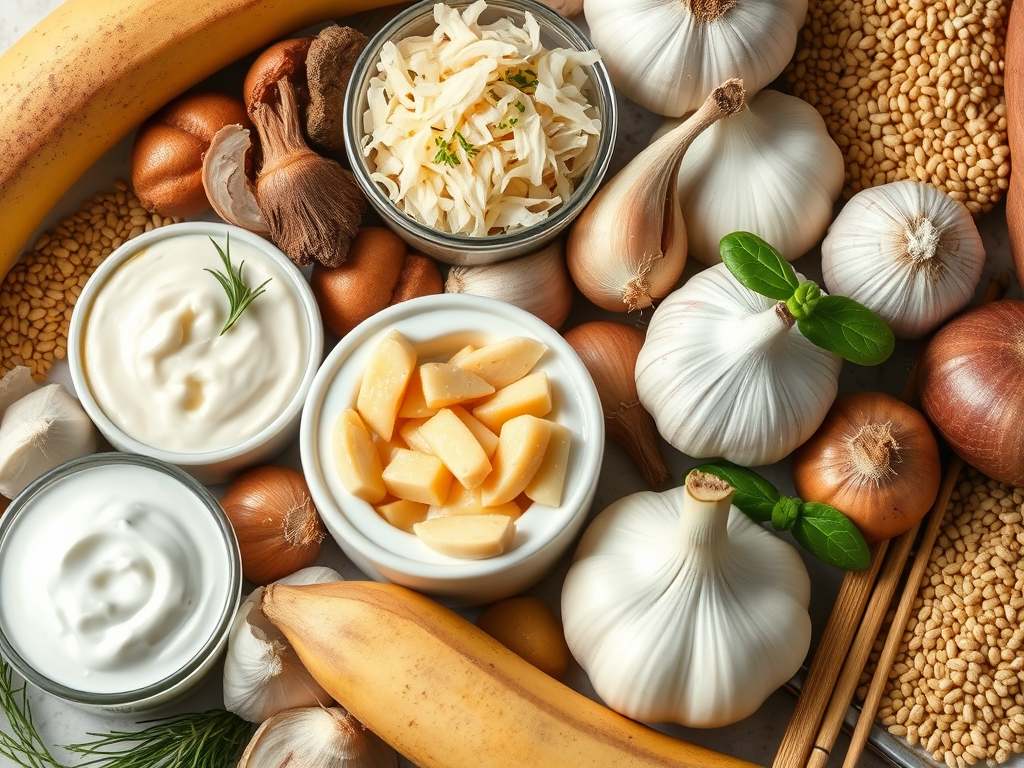
A thriving gut microbiome needs insoluble fiber to flourish, and many foods naturally provide this essential nutrient. Some of the best sources include whole grains (oatmeal, whole grain bread, and pasta), vegetables (asparagus, leeks, onions), starchy vegetables (sweet potatoes, corn), fruit (bananas), and legumes (beans, lentils, peas) (2,4). Including a variety of these fiber-rich foods in your diet helps support gut health, digestion, and microbial diversity (3).
Just as it’s important to fuel your microbiome, it’s equally important to limit foods that can deplete beneficial gut bacteria. Processed foods high in sugar, artificial sweeteners, and saturated fats can negatively impact gut health over time (2,3). Reducing these foods and choosing healthier alternatives can make a big difference in your digestion, energy, and overall well-being.
Looking for easy ways to add more fiber to your meals? Try out my 28-Day Refresh Meal Plan packed with delicious, gut-friendly recipes!
Probiotic supplements
There are many strains of probiotic microbes, each offering unique benefits. Some of the most commonly used strains in probiotic supplements include Lactobacillus, Bifidobacterium, Saccharomyces, Streptococcus, Enterococcus, Escherichia, and Bacillus (9). While many of these strains are naturally found in the human microbiome, not all probiotic supplements contain strains identical to those in your gut (1). Supplement manufacturers combine different strains in varying amounts, leading to a wide range of products with different effects.
Unlike food products, probiotic supplements are not closely regulated in the U.S., meaning some brands may contain fewer or different probiotics than what’s listed on the label (8). This is why choosing a high-quality, third-party-tested probiotic is essential to ensure you’re getting what you need.
Looking for a high-quality probiotic? Check out my recommended probiotic supplement*, chosen for its clinically studied strains, potency, and reliability.
Important Note: Probiotic supplements should not be given to premature infants, individuals with severe illnesses, or those with compromised immune systems unless recommended by a healthcare professional. In some cases, they have been linked to adverse effects (1).
Looking for a high-quality prebiotic? Check out my recommended prebiotic supplement*, chosen for its clinically studied strains, potency, and reliability.
Prebiotic supplements contain starches and fibers that nourish beneficial gut microbes, helping them thrive and produce health-supporting compounds. Some of the most common prebiotics found in supplements include inulin, galactooligosaccharides (GOS), fructooligosaccharides (FOS), and lactulose (4). These fiber-rich compounds act as fuel for good bacteria, promoting a more diverse and balanced microbiome.
Looking for a high
For the best results, pair probiotics with prebiotics to enhance gut health, digestion, and overall well-being!
Final thoughts
Gut health is about more than just digestion—it plays a vital role in both physical and mental well-being. A balanced gut microbiome supports everything from nutrient absorption and immune function to mood regulation and inflammation control. One of the most effective ways to nourish your microbiome is through probiotic-rich fermented foods and fiber-packed prebiotic foods. When needed, high-quality probiotic and prebiotic supplements can also help fill in the gaps.
If you’re looking to optimize your gut health, boost overall wellness, or improve mental well-being, I’d love to help. As a Doctor of Clinical Nutrition, I specialize in guiding individuals toward evidence-based, sustainable strategies for gut and mental health.
Need support in building a healthier microbiome? Looking for personalized recommendations tailored to your health goals? Book a complimentary discovery call today to see how my programs and expert guidance can help you thrive!
In Health,
Dr. Tara Torres, DCN, CNSc, CLT
Doctor of Clinical Nutrition
Sky Therapeutics
Affiliate Disclosure*
Some of the links in my posts are affiliate links, which means I may earn a small commission if you make a purchase through them—at no extra cost to you. I only recommend high-quality, third-party-tested supplements that I trust and use in my own practice. These commissions help support my work in providing evidence-based nutrition guidance and free content to help you improve your health.
Your support is truly appreciated! If you have any questions about supplements or need personalized recommendations, feel free to reach out. Always consult with your healthcare provider before starting any new supplement.
References
- National Center for Complementary and Integrative Health. (2019, August). Probiotics: What You Need To Know. https://www.nccih.nih.gov/health/probiotics-what-you-need-to-know
- Harvard Health Publishing. (2022, November 14). Probiotics and prebiotics: what’s really important? https://www.health.harvard.edu/nutrition/are-you-getting-essential-nutrients-from-your-diet
- Corliss, J. (2023, November 1). How a healthy gut helps your heart. Harvard Health Publishing. https://www.health.harvard.edu/heart-health/how-a-healthy-gut-helps-your-heart
- Ji, J., Jin, W., Liu, S. J., Jiao, Z., & Li, X. (2023). Probiotics, prebiotics, and postbiotics in health and disease. MedComm, 4(6), e420. https://doi.org/10.1002/mco2.420
https://www.ncbi.nlm.nih.gov/pmc/articles/PMC10625129/ - Golen, T & Ricciotti, H. (2021, November 1). What are postbiotics? Harvard Health Publishing. https://www.health.harvard.edu/nutrition/what-are-postbiotics
- Del Toro-Barbosa, M., Hurtado-Romero, A., Garcia-Amezquita, L. E., & García-Cayuela, T. (2020). Psychobiotics: Mechanisms of Action, Evaluation Methods and Effectiveness in Applications with Food Products. Nutrients, 12(12), 3896. https://doi.org/10.3390/nu12123896
https://www.ncbi.nlm.nih.gov/pmc/articles/PMC7767237/ - Selhub, E. (2022, September 18). Nutritional psychiatry: Your brain on food. Harvard Health Blog. https://www.health.harvard.edu/blog/nutritional-psychiatry-your-brain-on-food-201511168626
- Harvard Health Publishing. (2022, February 2). Should you take probiotics? https://www.health.harvard.edu/staying-healthy/should-you-take-probiotics
- Office of Dietary Supplements. (2023, November 3). Probiotics: Fact Sheet for Health Professionals. https://ods.od.nih.gov/factsheets/Probiotics-HealthProfessional/
- British Medical Journal. (2020, July). Probiotics alone or combined with prebiotics may help ease depression. https://www.bmj.com/company/newsroom/probiotics-alone-or-combined-with-prebiotics-may-help-ease-depression/
 Sky Therapeutics